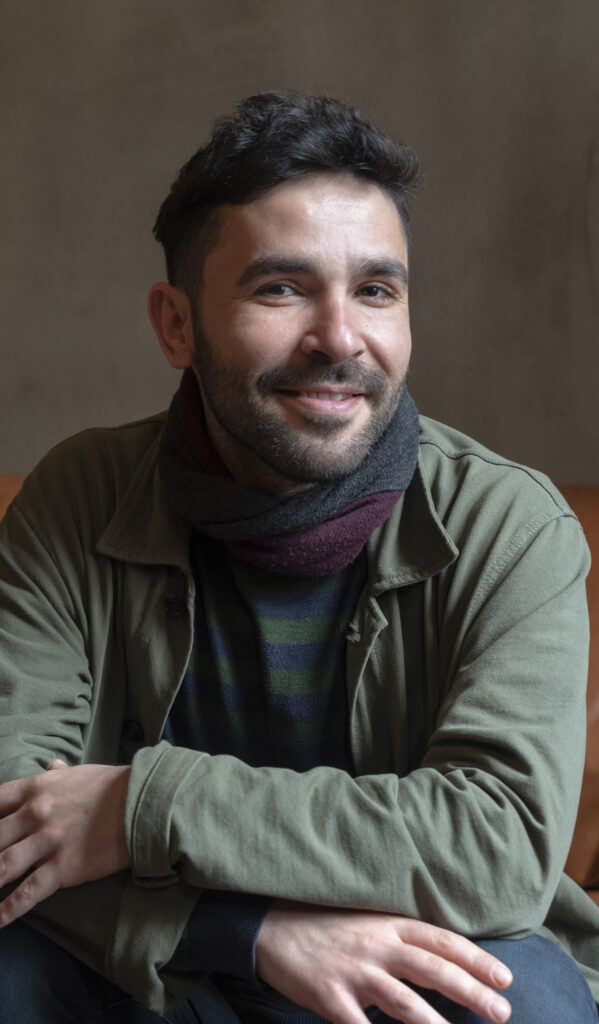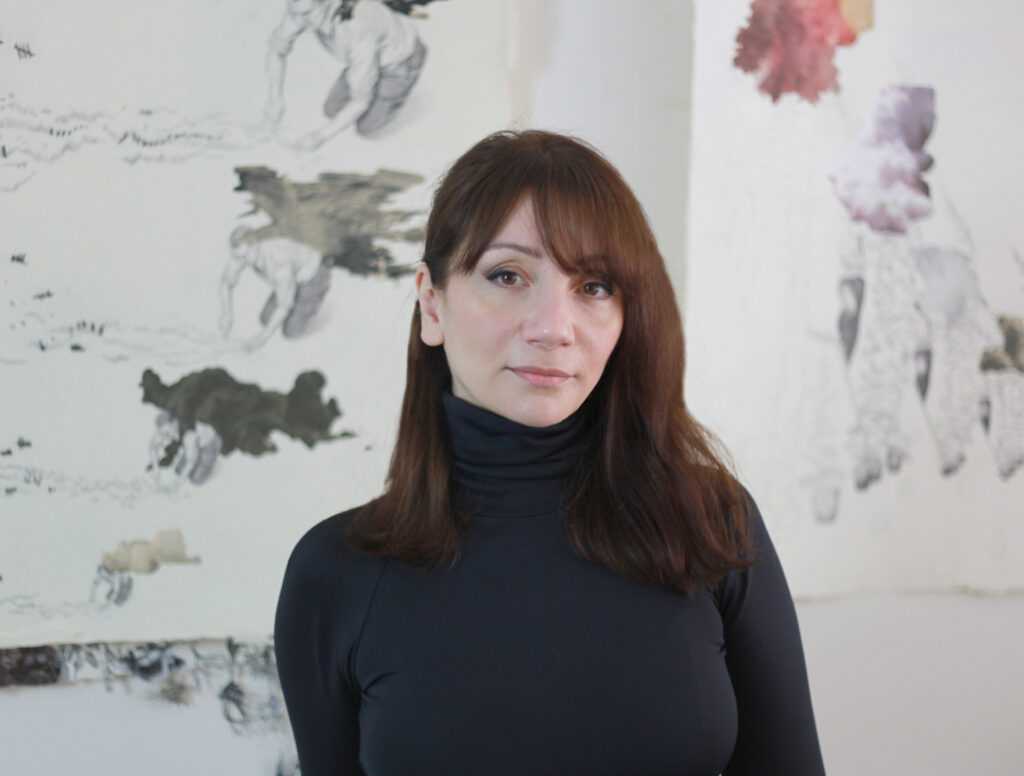
Eda Gecikmez (b. 1984, Istanbul) explores bodies and spaces that are shaped, fragmented, and reproduced through diverse agents by working across various mediums such as painting, drawing, collage, and performance. She employs a visual language nourished by feminist and avant-garde traditions, tracing the relationships that form between the historical, textual, every day, mythic, and political realms without separating them from each other. Gecikmez graduated from the Painting Department of Mimar Sinan Fine Arts University in 2010. During her undergraduate education, she studied for one year at San Carlos Faculty of Fine Arts, Valencia Polytechnic University in Spain. In 2015, she participated in artist residency programs at Cittadellarte – Fondazione Pistoletto, Biella, Italy; Kultivera, Tranås, Sweden; and in 2023 at ISCP, New York, USA. In 2016-2017, she attended the Home Workspace Art Education Program organized by AshkalAlwan, the Plastic Arts Association in Beirut, Lebanon. In 2019, she received her Master's degree in Art and Design from the Institute of Social Sciences at Yıldız Technical University. Most recently, in 2024, Gecikmez graduated from the Proficiency in Art Program in the Painting Department of Hacettepe University’s Fine Arts Institute and continues her practice between Istanbul and Ankara.
Photo: İbrahim Karakütük
Upside Down Square
I understand my artistic practice not only as a matter of a two-dimensional surface, but also as a field of action. As a Turkish woman artist, while grappling with how to position myself outside a male-dominated and Western-centric art history, I also strive to develop a mode of expression that can free itself from the cultural norms and judgments of the geography to which I belong. I produce work with an awareness of the political implications of the materials I use, what they represent, and where they are exhibited. In this sense, I seek to appropriate and transform the possibilities of materials, creating new forms of visibility and legibility. Rather than producing representations, I am interested in translating ideas into images and constructing a form of counter-archive. At the same time, I see exhibition spaces as places for gathering, discussion, and exchange.
During my time at SAHA Studio, I developed two parallel projects simultaneously. In the first half of the program, I began compiling the archive of Kırmızı Kart (Red Card), an initiative active between 2011 and 2015 that created a collective space of solidarity and action against the inequalities, violence, and discrimination produced by the patriarchal system. Founded by women artists, cultural workers, writers, and activists, including myself, the group sought to respond to the increasing rates of femicide, legal injustices, and social oppression in Turkey by refusing silence. Through the sharing of experiences and creative production, it aimed to generate empowerment and visibility. Bringing together women from different backgrounds, the initiative created a space to support one another in confronting male dominance and patriarchal authority in both private and public spheres, while intervening in structures of discrimination and inequality. The group actively participated in events and demonstrations organized by women’s organizations, designed posters and banners, intervened in court cases, and organized regular gatherings where feminist writers and thinkers were invited to discuss key feminist texts. It also produced its own manifesto and ultimately carried out its own actions and interventions.
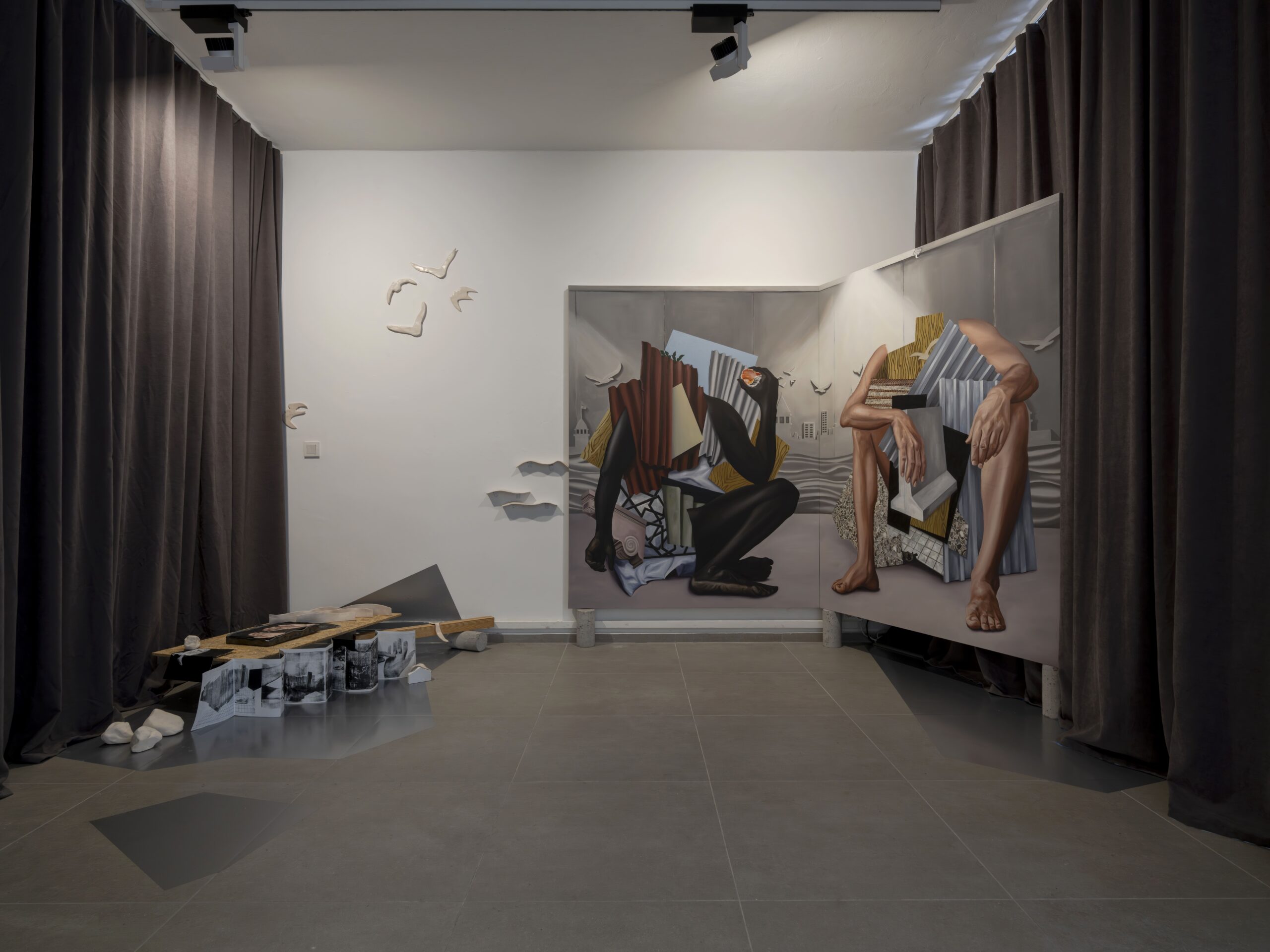
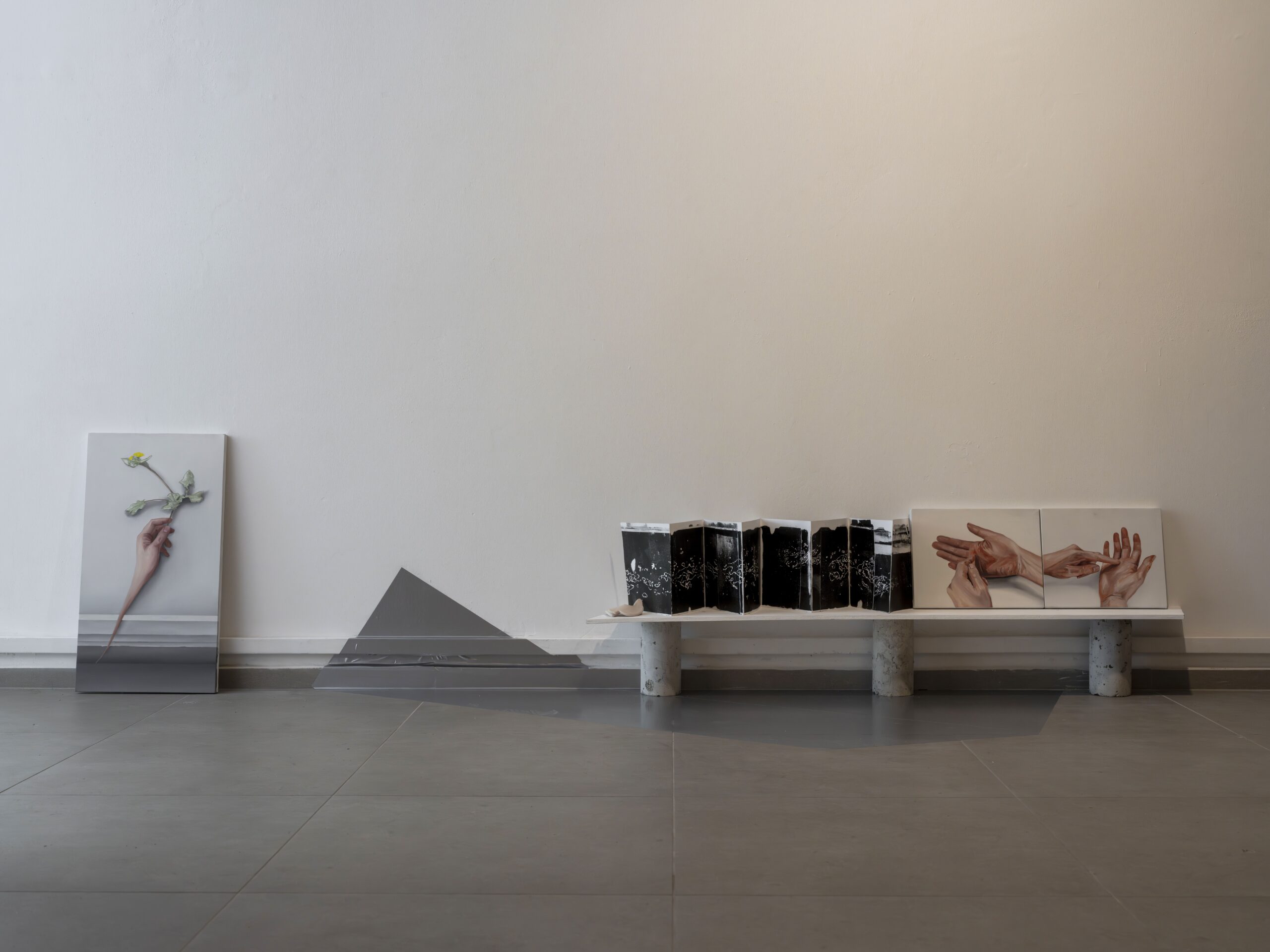
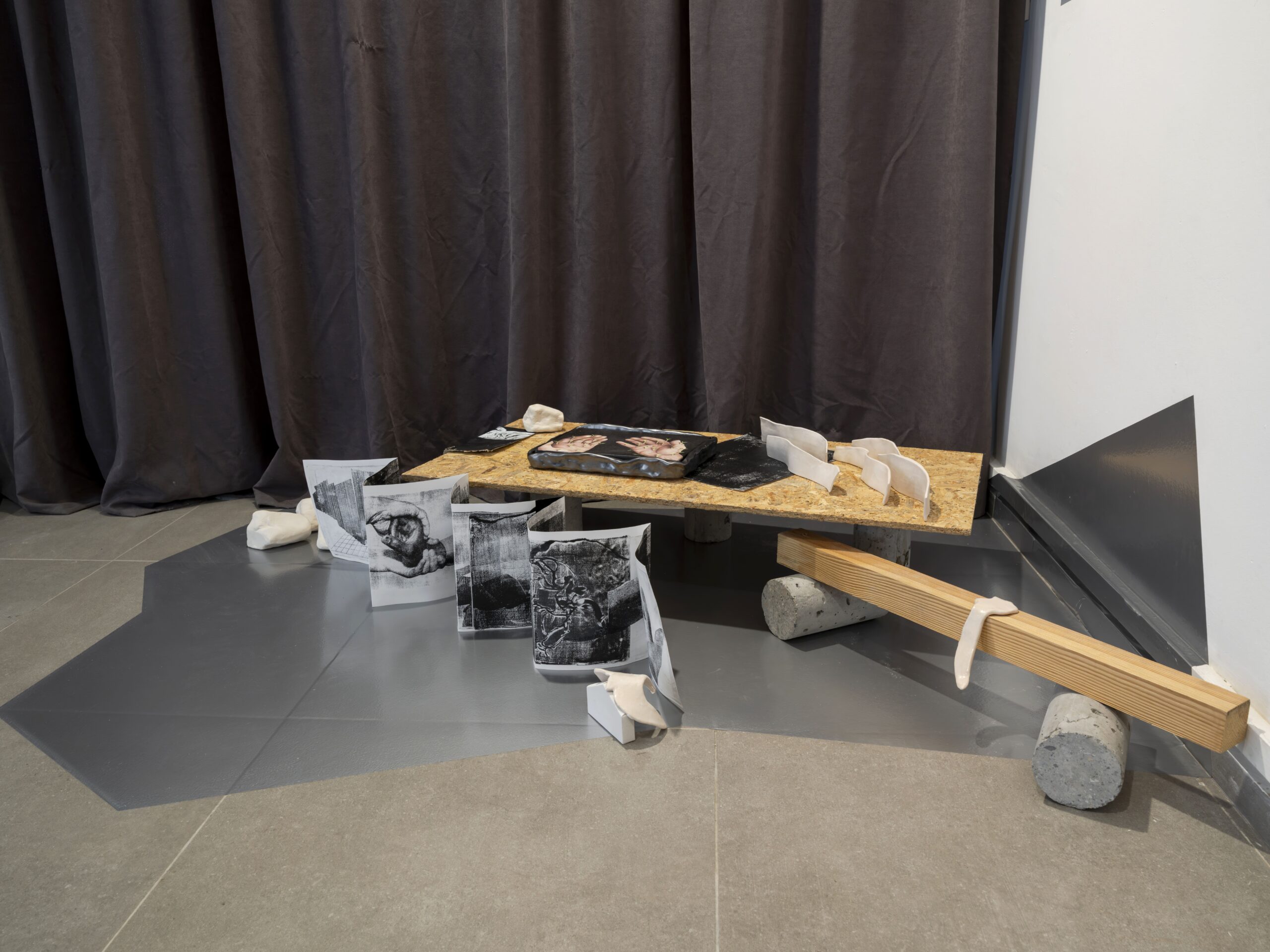
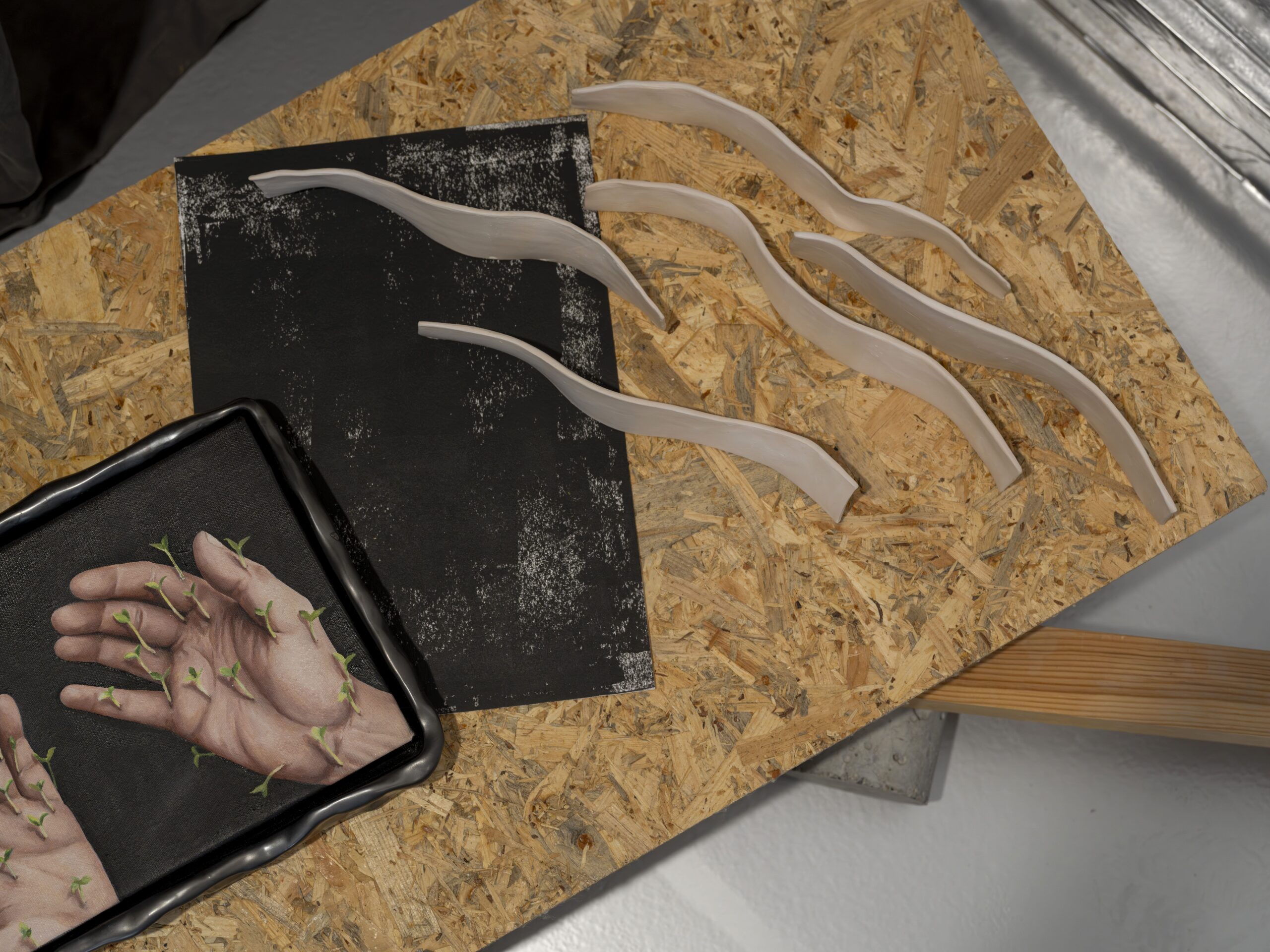
In the second half of the program, having returned to Istanbul after a five-year absence, I focused on collective memory and diverse forms of resistance. In the installation presented at SAHA Studio Open, I brought together painting, drawing, ceramics, and found objects to investigate alternative modes of existence within a city that is in a constant state of transformation. At the center of the installation are two figures in which bodily and architectural elements merge and exchange places, becoming entangled within one another. The background for these figures is the Taksim Underpass, a byproduct of the Taksim Pedestrianization Project that culminated in the Gezi Park protests of 2013. Reliefs, inscriptions, and stains found on the underpass walls are reproduced through drawing, printmaking, and ceramics, extending from the site into the studio space.