Zeynep Gürler (b. 1988, Ankara) is an artist and academic who lives and works in Düzce. Her practice explores the intersections of ecology, memory, and space through a multispecies lens that encompasses both human and nonhuman entities. She maintains an integrated approach, bridging artistic production with academic research and pedagogical practice. Gürler’s work combines photography, video, installation, and drawing with long term field research, focusing on rendering the temporal and affective layers of landscapes visible. In recent years, her projects centered around Lake Efteni have evolved into process based investigations into the relationship between ecology and memory. Gürler earned her Bachelor’s degree from the Department of Painting at Gazi University, Faculty of Fine Arts in 2010. She went on to complete her Master’s degree at the same institution in 2013, followed by a Proficiency in Art (PhD equivalent) in 2021.
Photo: Serhat Şatır
Sediment
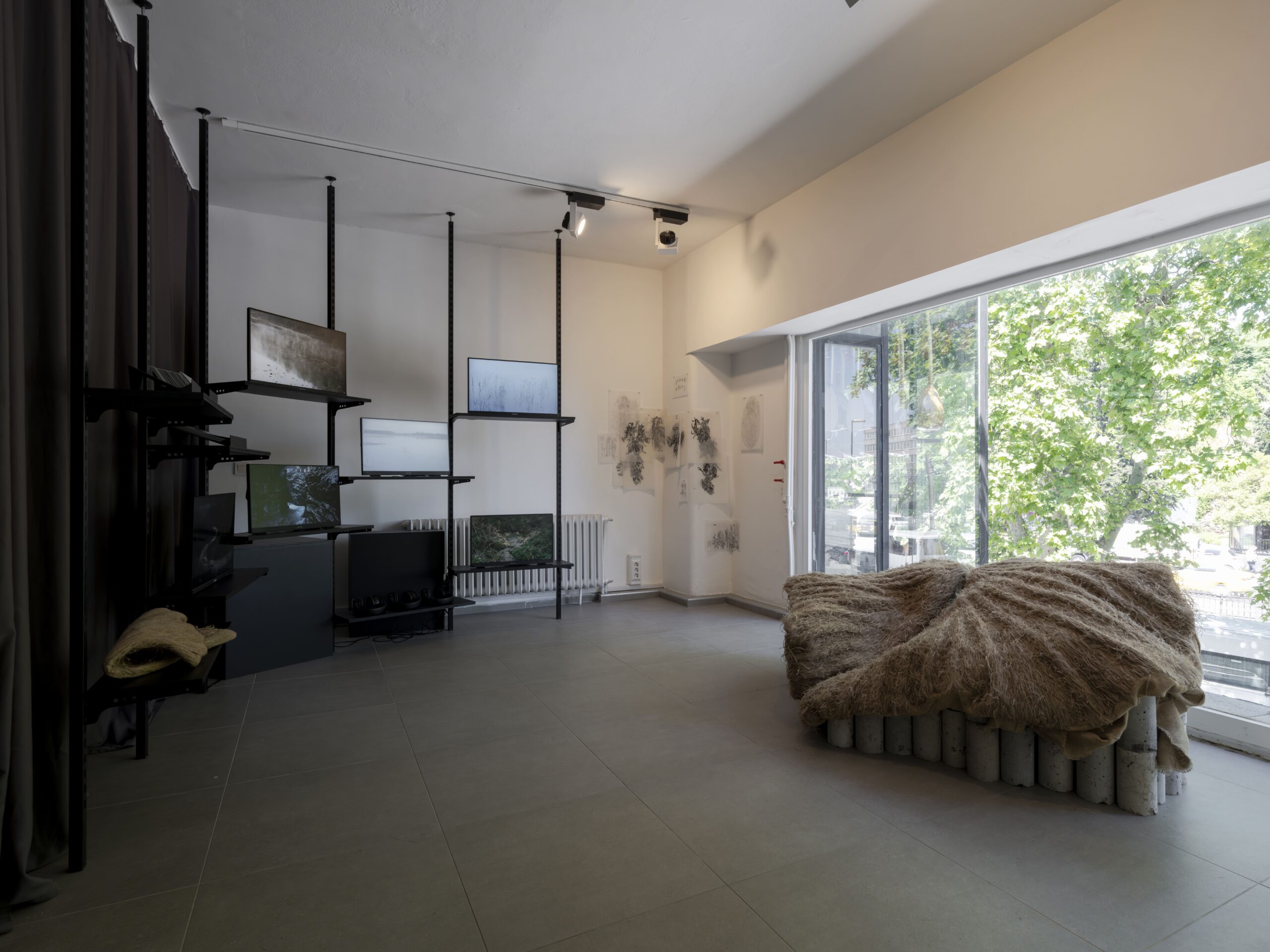
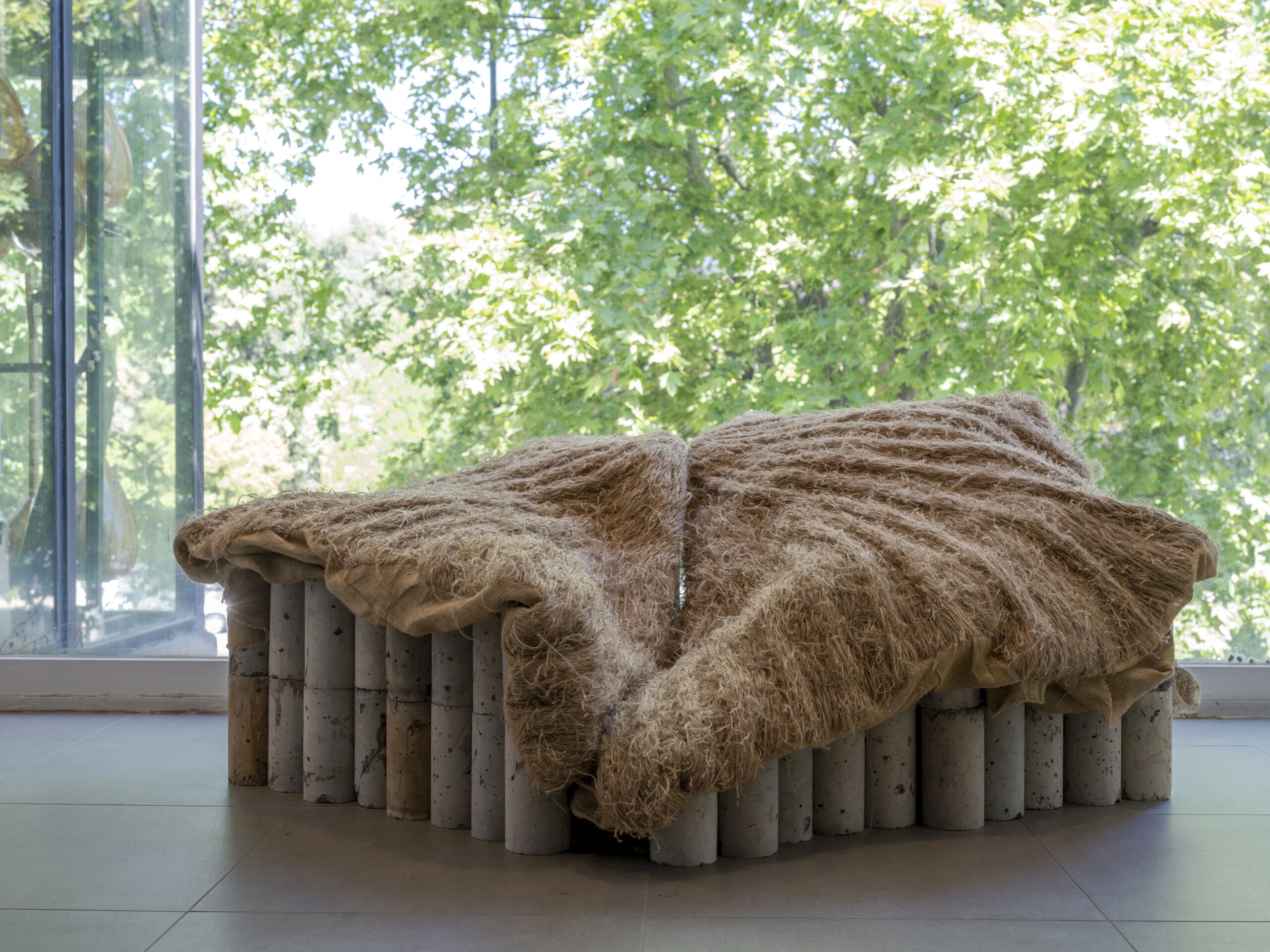
Sediment constitutes the second chapter of There, a research-based project that the artist began developing in 2023. Centered on the Efteni Lake basin, upon which the city of Düzce is built, the project approaches the lake as a carrier of spatial and sensory memory. Recurring images encountered during walks through the wetlands surrounding the lake become a means of rethinking the relationships between nature, humans, and more-than-human entities through photography, video, and drawing. The research is accompanied by a weaving practice that draws from the rhythms of these walks and extends across the basin itself. Conceived as a site-responsive installation that unfolds throughout the SAHA Studio space, the project seeks to make the multilayered memory of Efteni Lake visible through a range of media.
Tracing the movements of water both on the surface and beneath the ground, the project seeks to gather traces dispersed across collective memory. With a settlement history spanning nearly three thousand years, this basin follows the marks of shared habitats, extending from archaeological remains and local narratives to animal tracks and shifting water regimes. In doing so, it aims to make visible encounters that have been forgotten, overlooked, or unnoticed, while exploring how memory extends beyond the human realm, spreading through geography, water, and other living beings.
Over time, this practice of tracing leads the artist toward the material structure of the lake itself. Formed along the lake’s gradually receding edges, the marshland surface emerges as a recording field where different temporalities and modes of life accumulate and overlap. Just as the organic and inorganic matter carried by water settles and forms new layers, the stories, losses, and encounters that gather around the lake similarly become sedimented over time. For this reason, the project approaches the marsh as a living archive of memory; one that preserves, transforms, and renders visible the traces of the past. Developed through photography, video, drawing, and weaving, the project follows this layered structure shaped by both human and more-than-human entities, investigating how memory accumulates within geography and circulates through it.
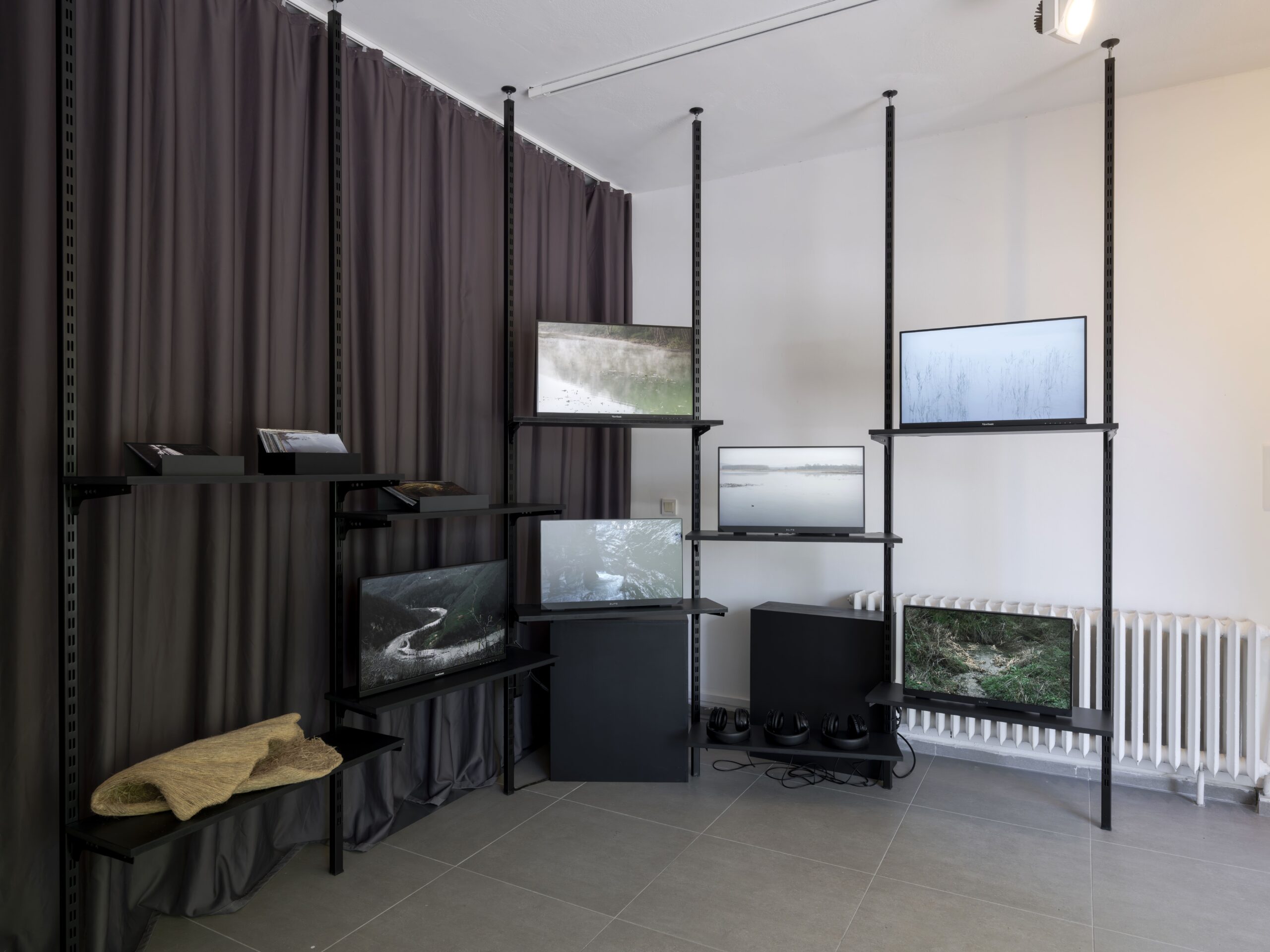
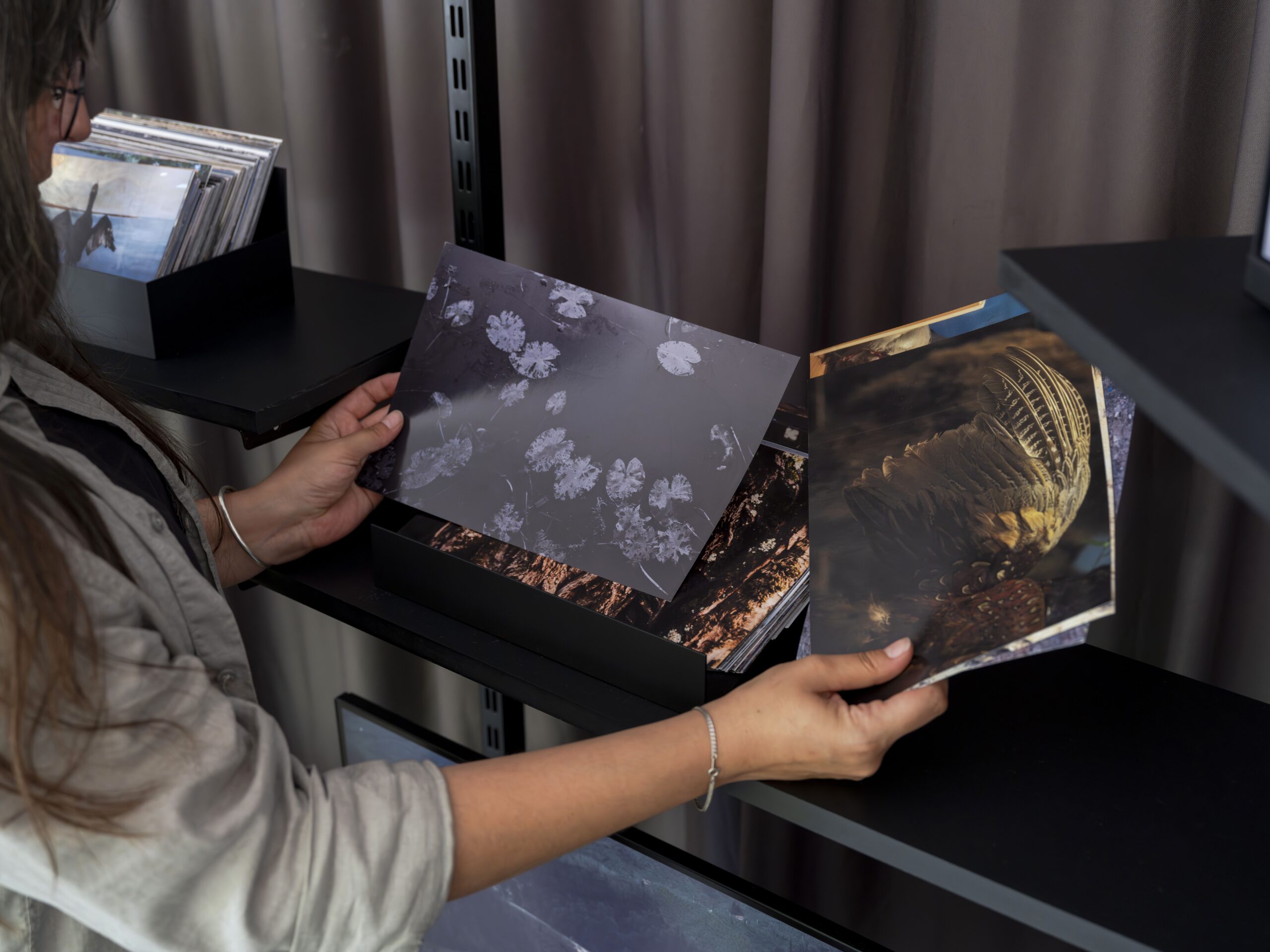
The videos in the project aim to explore a form of memory that works with the materiality of the marsh, rather than constructing a linear narrative. Spread across multiple screens, the moving images bring together the flow of water, the density of fog, the weight of mud, and the transformations that emerge on the surface. In this way, the lake appears not merely as a site through which time passes, but as a space where time settles, accumulates, and forms layers. The videos are accompanied by recordings of plants, animals, and water captured during the walks. A selection of photographs taken since the beginning of the There project also forms part of the installation. This selection aims to make visible both the ecological and social fragility of a lake increasingly transformed by human intervention rather than by natural processes. Sediment is not understood solely as a physical deposit; it also emerges in the ink and drawing works as a mode of remembrance, one that is repressed, overlooked, and at times forcefully brought back to the surface. Alongside non-human rhythms and local narratives, Efteni Lake becomes intertwined with traces that are both lost and suppressed, finding resonance in the weaving practice. Sediment persists as a form of remembrance that waits, listens, and accompanies between these encounters.