The Play of Shadows
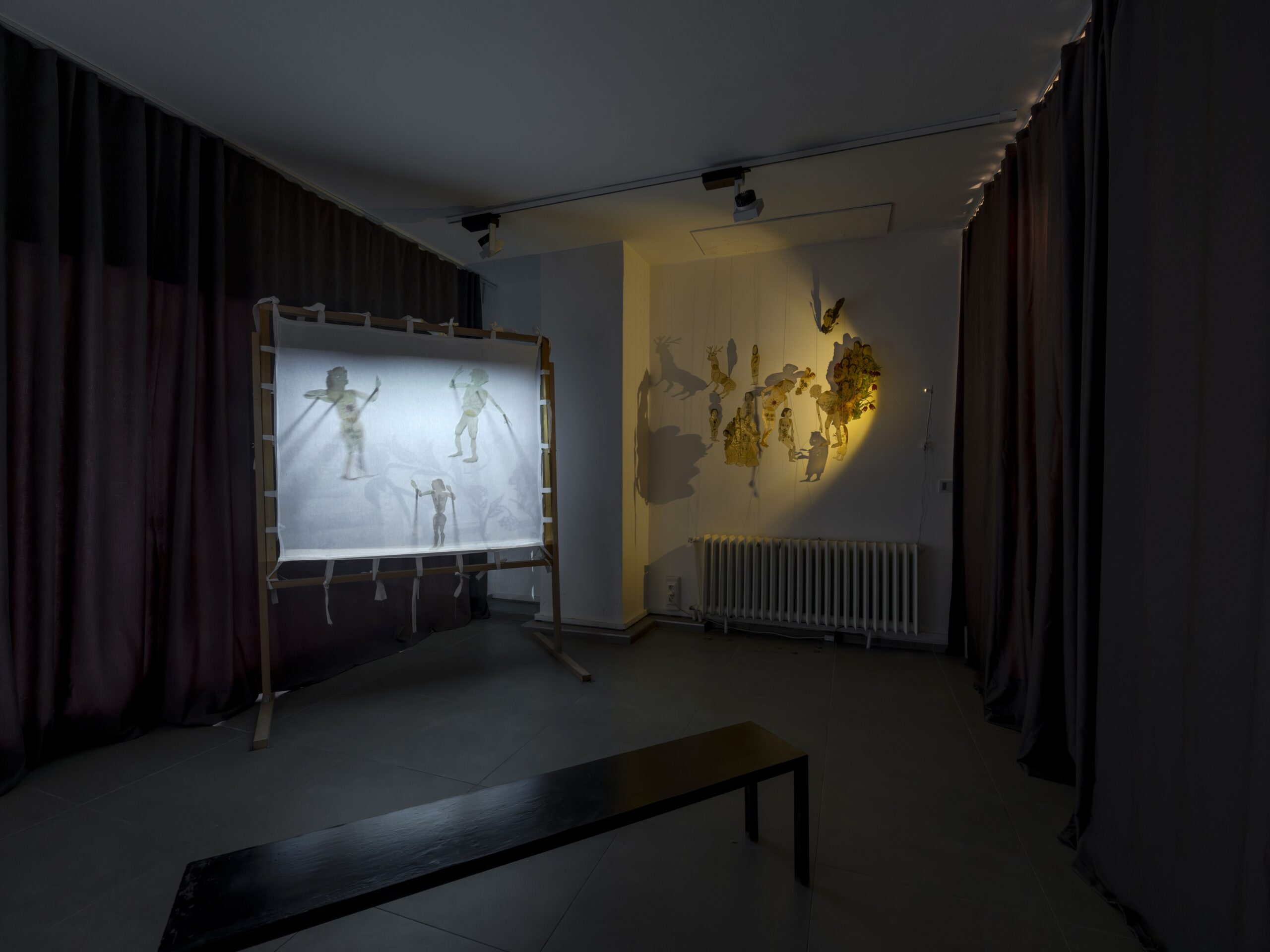
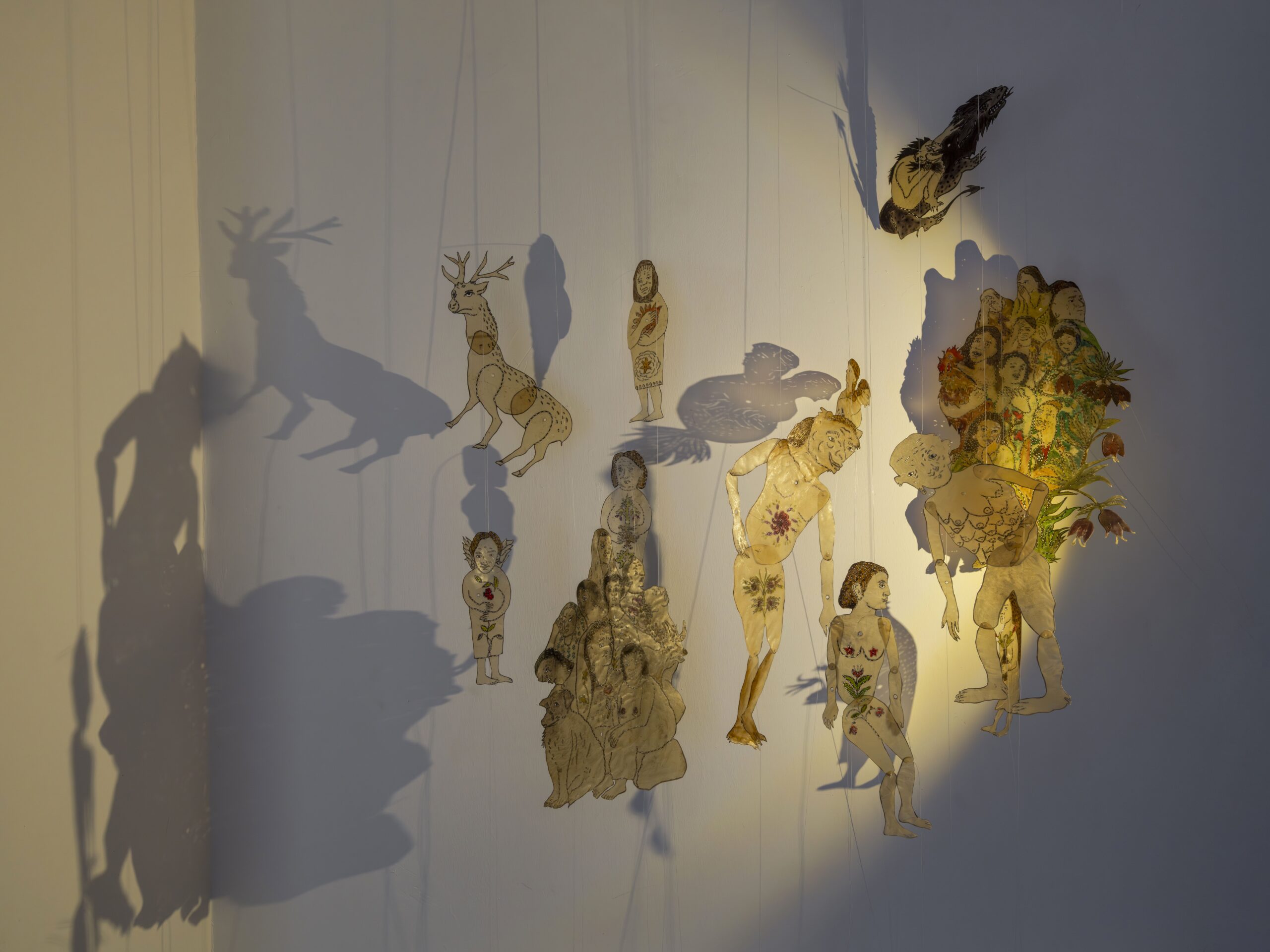
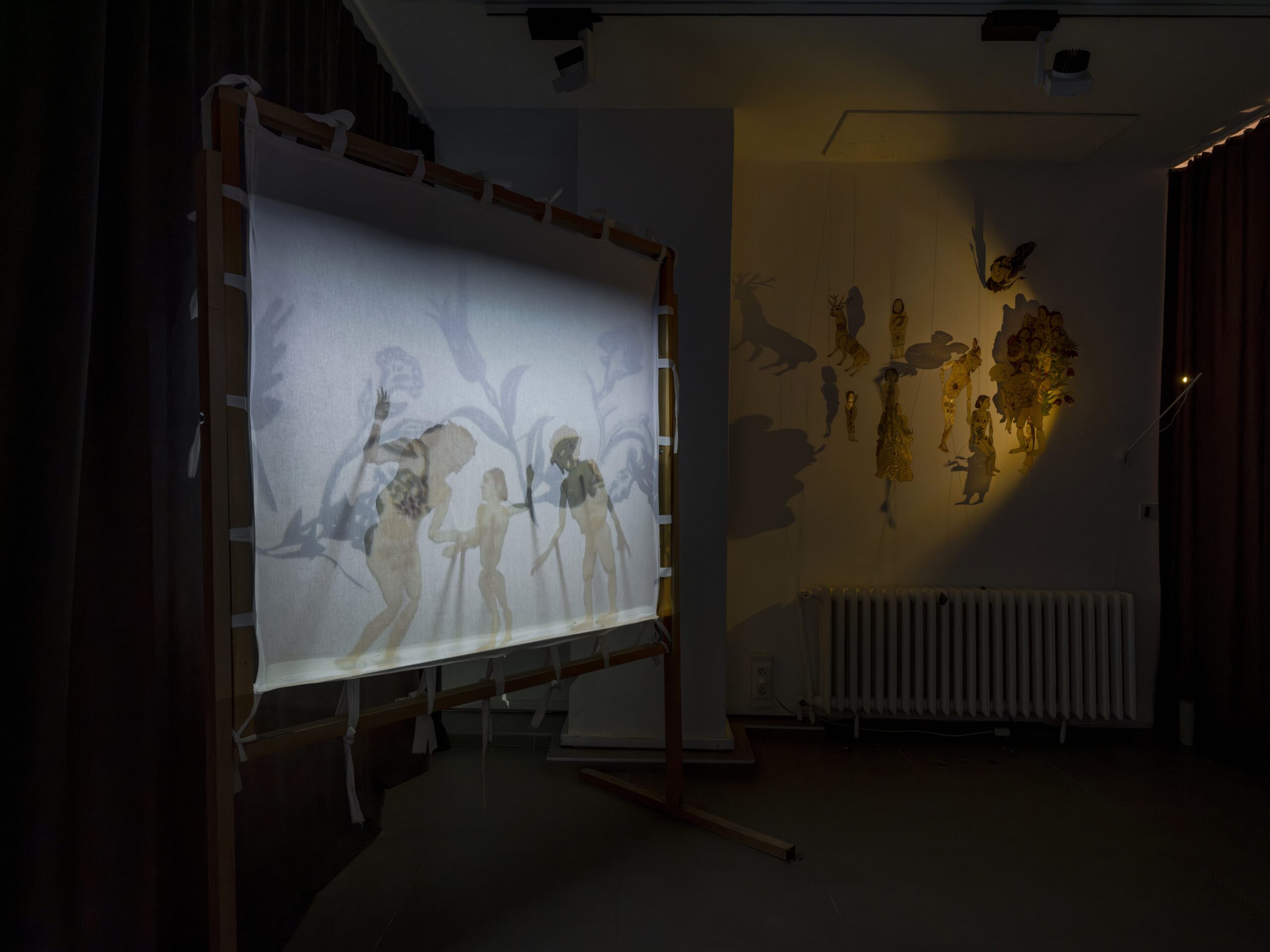
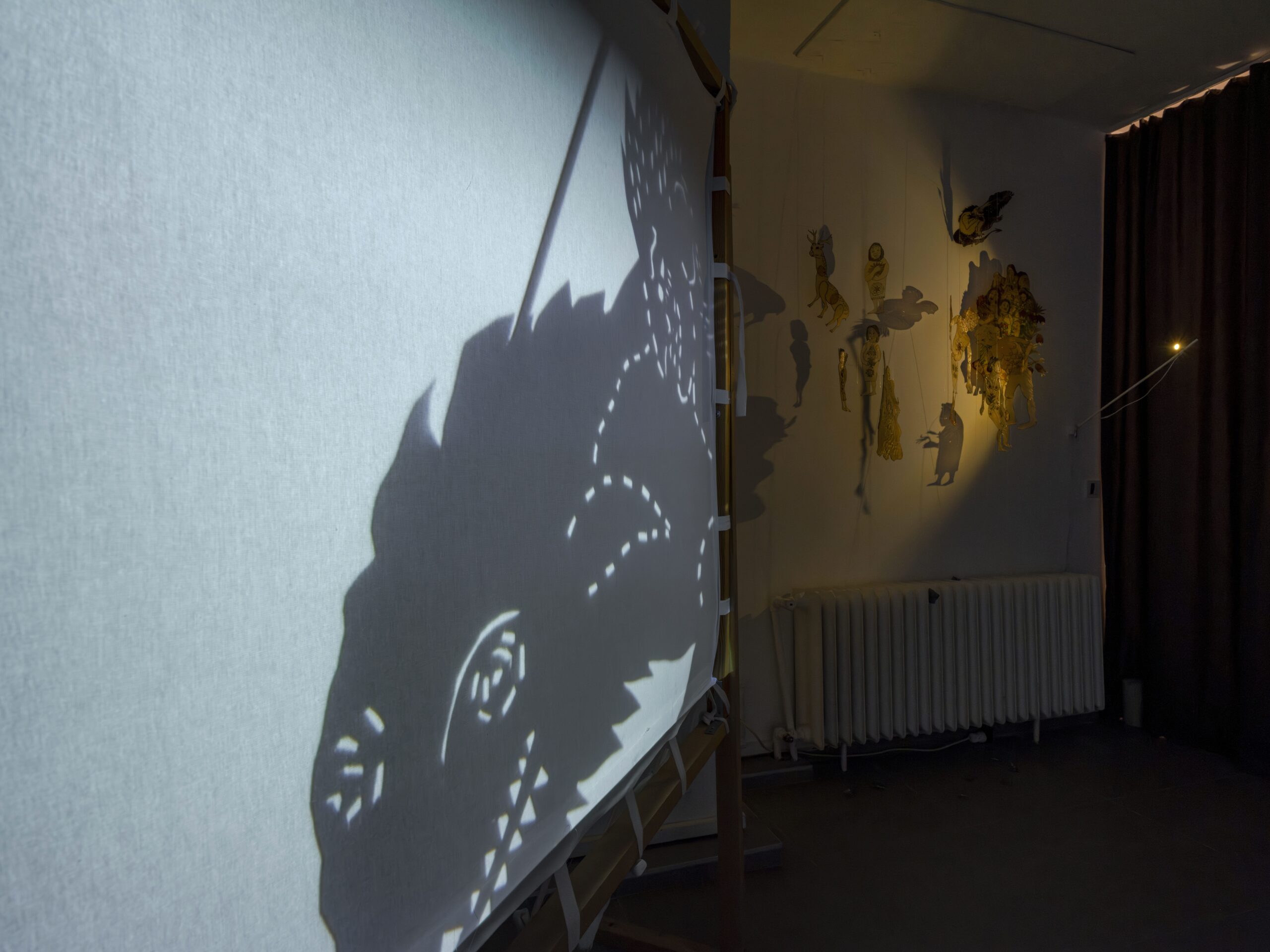
The Play of Shadows is a video installation informed by the traditional Turkish shadow theatre technique and a field of research shaped around it. Through puppets made of leather and paper, and a video work presented on a traditional shadow theatre stage, the work invites the viewer into a multilayered space of memory.
While focusing on the transformation processes of Istanbul, particularly those concentrated around Unkapanı and İMÇ, the work aims to investigate the different historical layers of the same geography through motifs. Traces belonging to the Greek, Byzantine, Ottoman, and Republican periods continue to exist by accumulating on top of one another. The phrase “continue to exist” is marked by an encounter with a structure in which continuity is frequently interrupted in the relationship established by state policies with the historical. For this reason, rather than following a linear flow, the work positions motifs as carriers of memory in order to make sense of a history that accumulates in layers and continuously affects the present.
By focusing on the interventions, relocations, and repositioning processes that the tombs of Kâtip Çelebi and Hızır Efendi, located in İMÇ Block 3, have undergone over time, the work opens up questions regarding how memory is preserved, transformed, or interrupted. It addresses the relationship between personal and collective history at moments when state policies change and historical ruptures occur, proceeding through questions of what is remembered, what is made visible, and what is left outside. In this context, the concept of the “motif” is considered as a field of research that carries the memory of the past into the present.
The video titled Eşik (Threshold), included in the installation, is produced through the aesthetics of traditional shadow theatre. Inspired by the “reviving the dead” motif found in Anatolian village theatrical traditions, the work approaches this ritual, which extends from the Greek period to the present day and still survives in certain regions of Anatolia, as a motif that carries memory. While this ritual is associated with the transformation of nature and the changing of the seasons, and represents a passage from one state to another, it primarily renders visible the moment of suspension on the threshold between these two states. In this respect, when considered in relation to the history of the geography we inhabit, the video establishes multiple connections with both the collective and the personal.